- The Sideline
- Posts
- 🏴☠️ The Anti-Plan
🏴☠️ The Anti-Plan
(why subtraction beats ambition this year)

Kinza Azmat
December 30, 2025

Every December, business owners fall into the same trap.
We sit down to plan the next year and immediately start adding more goals, more initiatives, more projects, more ideas. On paper, it looks ambitious. In reality, it creates the exact chaos most founders complain about by March.
The problem isn't lack of vision. It's planning from assumptions that make execution impossible. And if recognizing founder blind spots is the first step, this week’s newsletter is the fix.
The real killer of annual plans isn't effort. It's complexity and assuming plans are fixed. Most businesses quietly carry too much of it forward every year.
So instead of traditional planning, consider a different approach: anti-planning. Not doing more, but doing less on purpose.
Best Links
💰Sales: Founders report the highest satisfaction with AI tools, likely because they’re using AI for strategic thinking rather than production tasks.
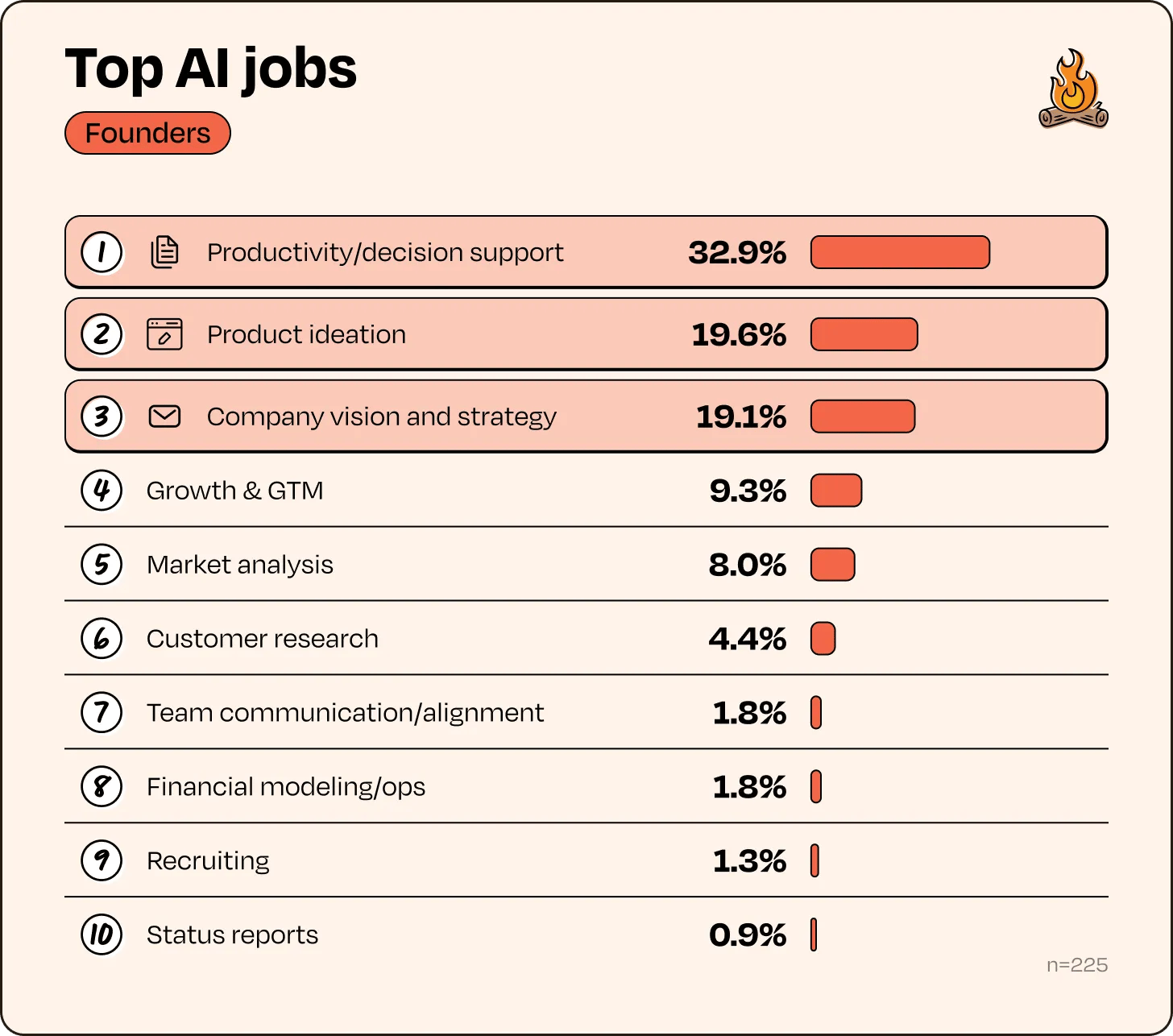
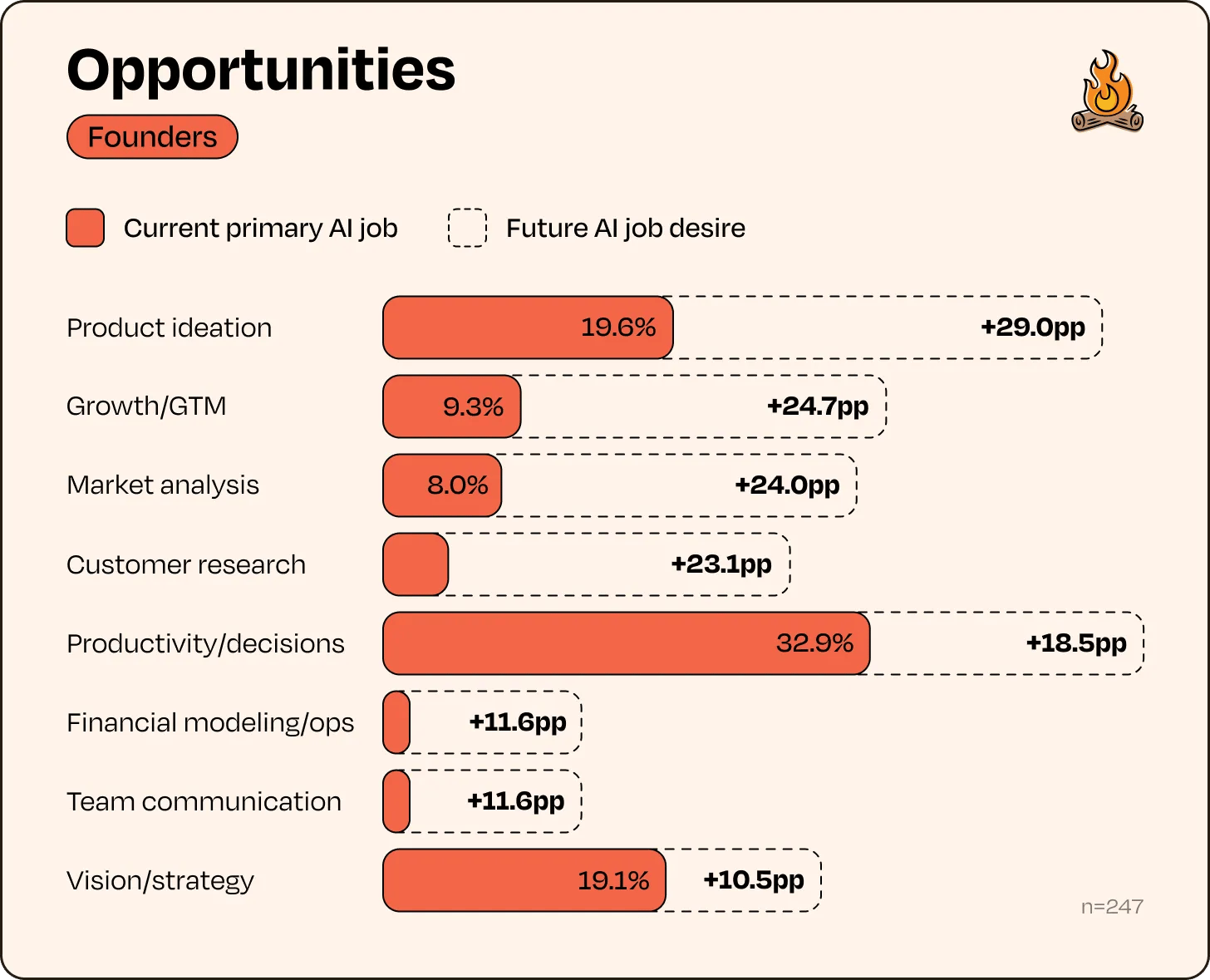
🌟 Industry Trends: The next wave of AI adoption needs better workflows for ambiguous problems, not just better models. Tasks with clear outputs like code are easy to integrate, but fuzzy work like competitive research and ideation remains the real challenge.
🍏 Extra Credit:


Why Anti-Planning Works
Business owners are wired to add. New ideas feel like progress. But subtraction creates speed.
When you remove the initiatives that drain resources without moving the business forward, three things happen:
your team stops splitting attention across competing priorities.
you finally see which projects actually matter.
decisions get faster because there's less noise in the system.
Anti-planning means asking harder questions before next year starts.
Which projects are still active only because of sunk cost?
Which meetings exist out of habit rather than necessity?
Which reports does nobody actually use?
Where are you maintaining systems that solved problems you no longer have?
The goal isn't minimalism for its own sake. It's creating the capacity to execute what actually matters. Most strategic plans fail not because the strategy was wrong, but because the organization was already at capacity before the new priorities arrived.
Start your 2026 planning by listing what stops, not what starts.
The Only Tests You Need
You don't need a 30-page plan. You need a few honest filters that actually change behavior.
1. The Identity Test
Look at any significant initiative in your business and ask yourself one question: "If I weren't already doing this, would I start it today?"
This cuts through the justifications immediately.
Examples": That product line you've maintained for three years…that partnership that made sense in 2022…that weekly meeting everyone attends but nobody finds valuable…
If you wouldn't choose to start them today, they're not future priorities.
2. The Excuses Test
Anything that's been "about to start" for months is sending you a clear signal. Either it genuinely doesn't matter, or it matters deeply and you've been avoiding the hard work of starting it.
Stop carrying these zombie priorities into next year. If it hasn't launched by now, it needs to either get a real start date with committed resources or get removed from the list entirely. Keeping it on the plan just creates guilt without creating results.
3. The Fix-It-Later Test
Every broken process, every draining client relationship, every role that no longer fits costs you more than you think. Not just in time or money, but in team morale and mental bandwidth.
The reason you haven't fixed these issues is usually because you're overloaded with initiatives that shouldn't exist anymore. When you clear those out, you suddenly have the capacity to address what's actually been holding you back.
Your One-Page Anti-Plan
This is the only planning output that matters. Write it on a single page where your entire team can see it.
3 things we will STOP
List the specific projects, products, or processes you're ending. Be concrete. "Stop the monthly client newsletter" is better than "reduce low-value activities."
3 things we will SIMPLIFY
Identify where you've built unnecessary complexity. Maybe your proposal process has seven approval steps when three would work. Maybe your product has features nobody uses that require constant maintenance.
3 things we will PROTECT
Name what's working that you refuse to compromise. This might be your Friday planning sessions, your quality standards, or the team culture elements that make people want to stay.
1 thing we will PURSUE with full focus
Pick the single initiative that will move the business forward most in the next quarter. Not the year. The quarter. This is what gets first priority for budget, attention, and your best people.
That's your plan. If it doesn't fit on a page, your team won't execute it.
Use this framework when new opportunities appear in February. Use it when someone pitches the "quick win" that will definitely only take a few hours. Use it when momentum starts slipping and you're tempted to add your way out of the problem.
Most businesses don't fail from lack of opportunity.
They fail from saying yes to too many of them.
Make next year the year you subtract your way into progress.
See you next week.
-Kinza
 |
Reply