- The Sideline
- Posts
- 🏈 He built a $5B brand by saying 'no' to Ford's $18M
🏈 He built a $5B brand by saying 'no' to Ford's $18M
10 years of Ferrari intensity in 10 lessons

Kinza Azmat
February 03, 2026
🏈 THE SIDELINE
Enzo Ferrari built one of the most iconic brands in automotive history.
He also created one of the most intense, volatile, and difficult-to-work-for companies in the world.
Ferrari’s personality type was Linebacker: the owner as a risk firewall.
He controlled every decision out of fear of failure. Resisted outside influence to preserve standards. And…he demanded perfection, tightening the vice under pressure.
If you're a Linebacker, you ask "what could go wrong?" before "what could go right?" New ideas need a lot of proof, and change generally feels HEAVY.
And that’s the Linebacker trap: People think you’re controlling, but you're just protecting (like my aussiedoodle, Cocoa).
You probably got here because past pain (a quality failure, a bad hire, a near-miss) has made you risk-averse. But your caution is now the bottleneck.
Ferrari's intensity created his competitive edge. But it also created turnover, conflict, and missed opportunities.
Here are 10 lessons from how Ferrari operated. A
nd how Linebackers can shift from protecting the past to building the future.
FROM THE FILM ROOM
🌎 Expand your thinking
Two topics that become sticking points when selling (Link)
What post-merger integration really looks like (Link)
Are AI agents starting to make an impact? (Link)
A 4-part framework on deals making the cut (Link)
Deal-breakers after signing letter of intent (Link)
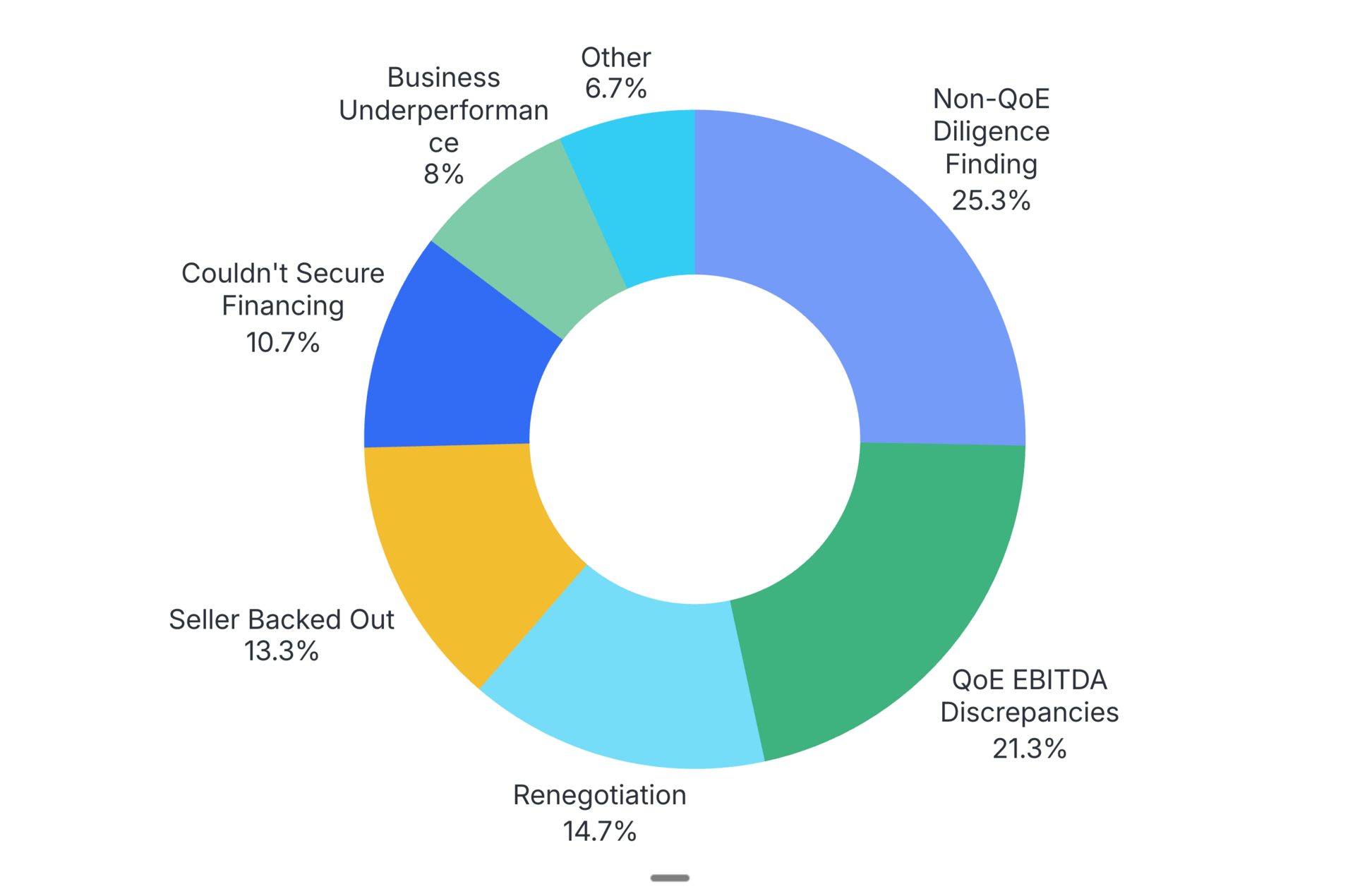
Quality of Earnings issues drive almost half of deal failures
🛠️ Tool Stack of the Week:
A social network for AI agents. 1.5M+ registered AI agents on Moltbook, have made 17K+ posts and 414K+ comments in communities called “submolts.”(Link)
Job seekers are suing the AI hiring tool Eightfold for allegedly creating secretive reports to help employers screen candidates.(Link)
MIT Media Lab found that despite $30-$40 billion invested in gen-AI tools, 95% of organizations see no return. (Link)
Surfer helps you analyze and compare your pages with the highest ranking websites regarding things like niches and keywords. (Link)
Hemingway reviews your writing and makes it simple. Get a readability score based upon US educational grades. (Link)
BUILDING A WINNING PROGRAM
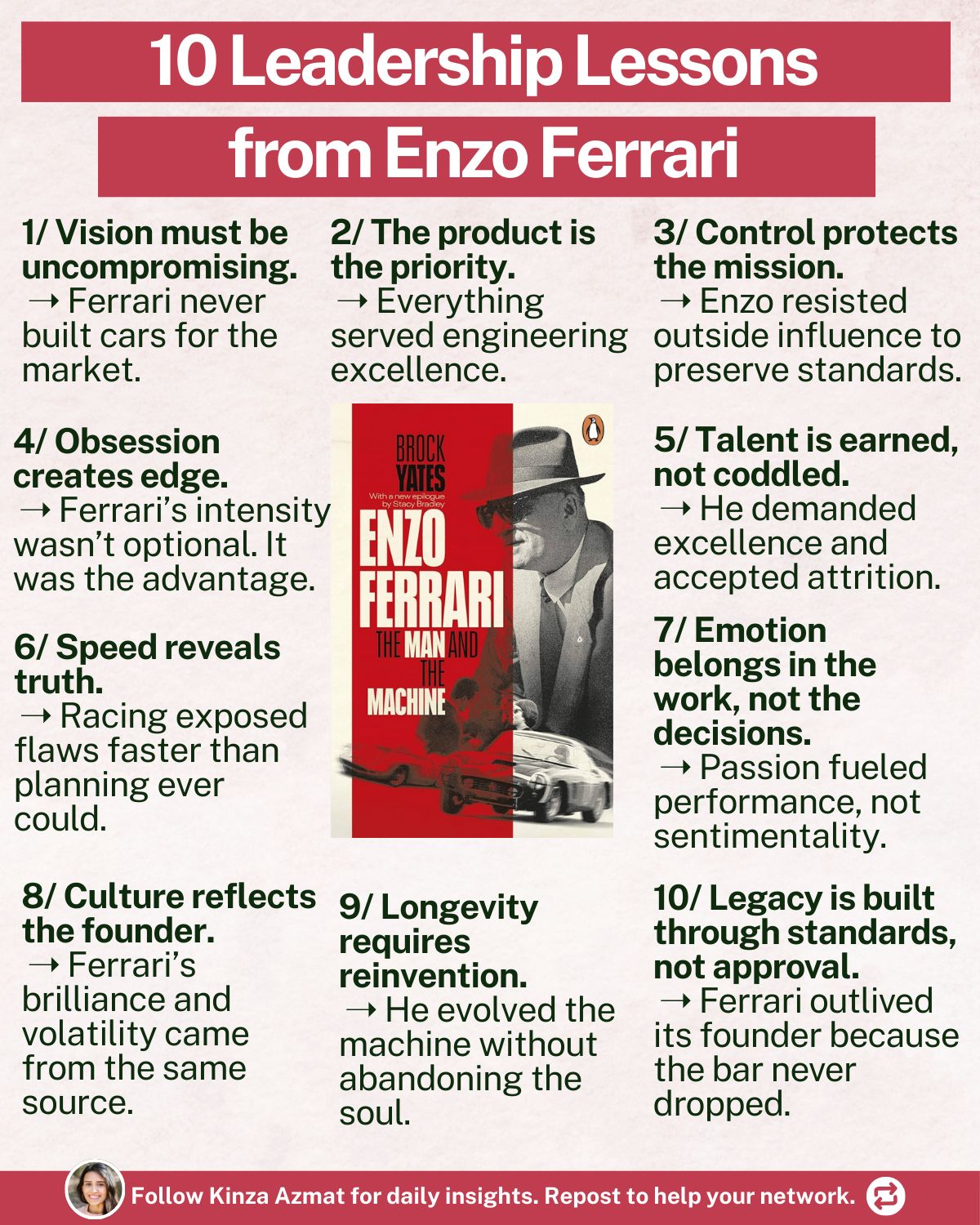
Lesson 1: Vision is uncompromising
Ferrari never built cars for the market. He built to his own standards and found customers who appreciated them. When Fiat wanted to buy Ferrari and said to build more accessible cars, Ferrari said “I don’t sell cars. I sell dreams.”
Your move: Write down your 3-5 non-negotiable standards. Delegate your preferences and protect your standards.
Lesson 2: Product is the priority
Everything served engineering excellence. Ferrari said: "I build engines and attach wheels to them." He even refused to sell cars to customers he didn’t think were worth of them.
Your move: Define "good enough" with objective criteria. If work meets those criteria, let it ship even if you'd do it differently.
Lesson 3: Control protects the mission
When Ford tried to buy Ferrari in the 1960s, Enzo walked away during final negotiations. He wouldn't let anyone else control the product, even for $18M.
Your move: You might control things because you’re protecting something important. But this has downside, too.
Ask: If protecting “it” is core to the mission, keep control. If it's protecting against unlikely risks, delegate.
Lesson 4: Obsession is your edge
Ferrari's intensity was his competitive advantage. He tested engines until they broke, just to redesign them. Imagine saying “the client isn’t always right, they must be educated.” That’s Enzo for ya!
Your move: Your intensity is a feature, not a bug. To manage it effectively, write down everything you currently review or control. Sort it into two buckets, “competitive edge" or "risk management." Focus on what creates an edge.
Lesson 5: Don’t coddle talent
Ferrari accepted only excellence and was fine with attrition. "I have no idols. I admire work, dedication, and competence."
Your move: High standards attract more high-performers. Just make sure to trust that people will meet them.
Lesson 6: Speed exposes cracks
Racing exposed design flaws fast and forced rapid iteration.
Your move: Pick one project where you're being overly cautious. This is going ot sound crazy but ship it at 80% instead of 95% (maybe a non mission critical one as a first go, ha!). Learn from real-world feedback instead of what’s made up in your mind.
Lesson 7: Don’t make emotional decisions
Ferrari was intense…but his product decisions were ruthlessly analytical.
Your move: If you’re a linebacker, you care deeply. But caring doesn’t mean controlling.
Before reviewing someone's work, ask: "Am I reviewing because it might not meet standards, or because I'm anxious?" If you’re anxious, don’t review it, set the standards ahead of time and trust your team to meet them.
Lesson 8: You are the culture
Ferrari's team experienced excellence and chaos, both of which came from Enzo's operating style.
Your move: Your team is learning their risk aversion from you. Instead of asking what could go wrong, ask what could go right. See if this changes the mood.
Lesson 9: You must reinvent to survive
Ferrari moved from racing to road cars without losing soul. Fuel injection, aerodynamics…. “The Ferrari of tomorrow will be different, but it will always be a Ferrari”
Your move: You can evolve while without abandoning your roots. Find an area where you're resisting change out of fear. Ask: "Can we try this new approach for a week?" Test it as an experiment.
Lesson 10: Legacy is built on standards, not approval
Ferrari outlived Enzo because nobody lowered the bar. His standards became philosophy, culture, and legacy.
Your move: It’s not your job to review everything your team produces. Document what good, better, best look like and train your team to apply them independently. Review a smaller portion of output every week, lower that number over time.
FINAL WHISTLE
Not sure if you're a Linebacker?
Take the 3-minute Ownership Archetype Quiz: 👉 Ownerquiz.com
Hit reply: What's your biggest challenge as a Linebacker? Do you think this newsletter is too long? Did you miss the AI prompt example in this edition?
Cheering for you,
Kinza

Reply